
Emotional Compatibility: What It Is — and Why It Matters in Dating
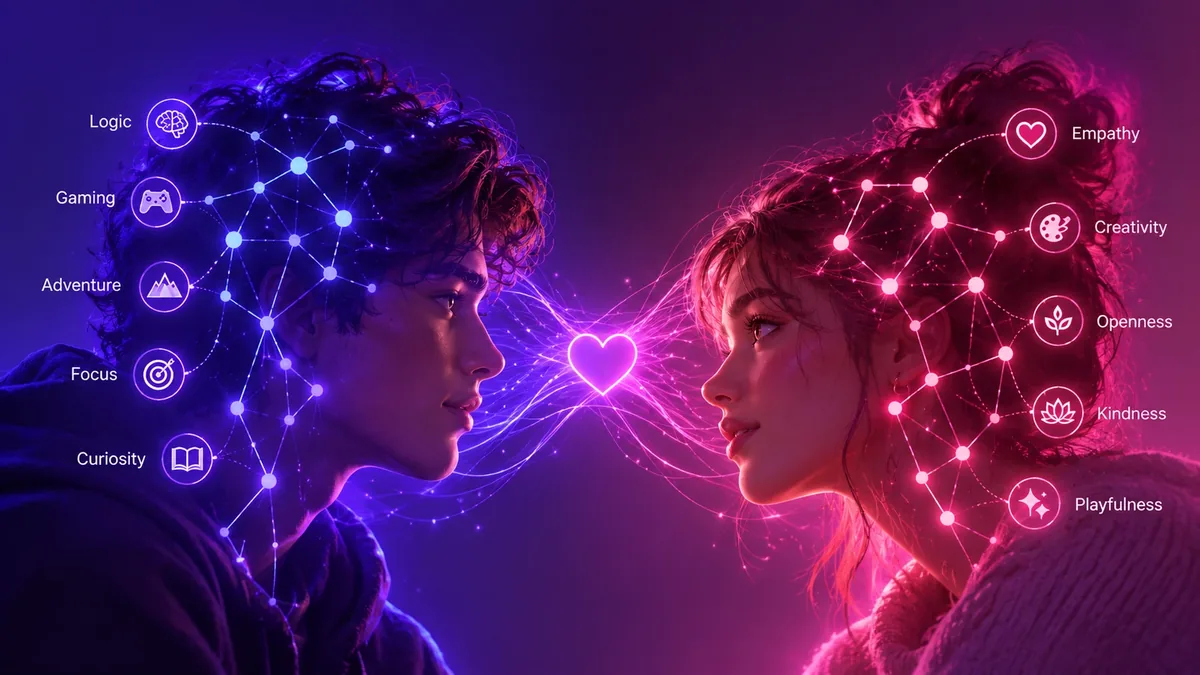
You can be attracted to someone and still feel like every conversation requires effort. You can have similar interests and completely different ways of handling closeness, conflict or communication. And sometimes you meet someone who doesn't look perfect on paper, yet being around them simply feels easy.
That difference often comes down to emotional compatibility.
Chemistry may create the spark, but emotional compatibility often determines what happens after it.
What is emotional compatibility?
Emotional compatibility is the degree to which two people naturally understand, respond to and connect with each other's emotional needs, values and communication styles.
It doesn't mean agreeing on everything. In fact, compatible people can have very different personalities, interests and opinions. The difference is that those differences don't constantly create friction.
You may communicate in ways the other person understands. You may want similar levels of closeness and independence. You may approach conflict differently but still be able to repair it. Most importantly, you can usually be yourself without constantly translating who you are.
Emotional compatibility is less about being identical and more about whether your ways of relating work well together.
Chemistry and compatibility aren't the same thing
Chemistry can be immediate. It's the excitement, attraction or curiosity that makes someone stand out from the room — or from a screen.
Compatibility tends to reveal itself more slowly.
You might have intense chemistry with someone whose communication style drives you crazy. Or you might meet someone who doesn't create instant fireworks but becomes more attractive as conversation deepens and you discover how naturally you understand each other.
Neither matters less. They simply answer different questions.
Chemistry asks: Do I feel something?
Compatibility asks: Does being together actually work?
Strong relationships often need some version of both.
What does emotional compatibility look like?
It often shows up in small moments rather than dramatic declarations. You understand each other's humor. A disagreement doesn't immediately become a threat. One person asking for space doesn't automatically make the other feel rejected. You can talk about something uncomfortable without feeling like the entire connection is about to collapse.
It can also show up in shared priorities. Two people don't need identical goals, but major differences around relationships, lifestyle, communication or values can become difficult to ignore over time.
That is why matching only around surface-level preferences can miss a lot. Liking the same music, restaurants or TV shows can make conversation easier. It doesn't necessarily tell you whether two people will understand each other emotionally.
Can you tell if you're compatible right away?
Not completely.
Compatibility isn't a score that can perfectly predict a relationship, and no matching system can guarantee chemistry. Some things only become visible with time.
But you can learn more than a profile photo usually tells you.
How someone answers a question, reacts during a game, handles a small disagreement or responds when something unexpected happens can reveal surprisingly useful information about their personality and communication style.
The more two people actually interact, the more signals they get beyond appearance and carefully written bios.
That's why compatibility becomes much more interesting when it isn't treated as a static percentage, but as something you continue discovering together.
Dating beyond the perfect profile
Traditional dating profiles encourage us to package ourselves into a few highly optimized pieces: the best photos, the right bio, the most attractive interests.
But people are harder to summarize than that.
Sometimes the thing that makes you connect with someone is difficult to write in a profile at all. Their timing. Their energy. The way they joke. How competitive they suddenly become during a game. The fact that the conversation moves somewhere neither of you expected.
A better dating experience should create space for those signals too.
Instead of asking only “Do I like this profile?”, it can help you answer a more interesting question:
“How do I feel when I interact with this person?”
Compatibility first. Chemistry through interaction.
That's part of the thinking behind GENZA.
You build your own Vibe Code across personality traits, then GENZA uses compatibility to help surface people you may connect with. Your avatar lets you express yourself beyond a traditional dating bio, while shared experiences give both people something real to react to.
Skip the awkward small talk. Play fun co-op games for two. See if you click.
Compatibility isn't a promise that two people will fall for each other. It's a better starting point for finding out.
Because sometimes the most interesting match isn't the person who looks perfect in a profile.
It's the person who simply gets your vibe.